Board-certified orthopaedic clinical specialist. Founder of Horizon Physical Therapy & Rehabilitation and Flint's Finest Basketball Club. Two decades turning recovery into performance — and potential into opportunity.
ABPTS Board-Certified Orthopaedic Clinical SpecialistDoctor of Physical TherapyUniversity of Michigan–FlintAPTA Credentialed Clinical InstructorCertified Kinesio Taping PractitionerIntegrative Systemic Dry NeedlingSpinal Manipulation InstituteMDT — Cervical · Thoracic · LumbarWCPT International Congress PresenterUSA Basketball Certified CoachABPTS Board-Certified Orthopaedic Clinical SpecialistDoctor of Physical TherapyUniversity of Michigan–FlintAPTA Credentialed Clinical InstructorCertified Kinesio Taping PractitionerIntegrative Systemic Dry NeedlingSpinal Manipulation InstituteMDT — Cervical · Thoracic · LumbarWCPT International Congress PresenterUSA Basketball Certified Coach
Three arms, one mission
I do one thing: help people move forward.
Sometimes that means a shoulder that works again. Sometimes it means a scholarship offer. Sometimes it means a room full of professionals who leave with a different standard for their own work.
01
Clinical Care
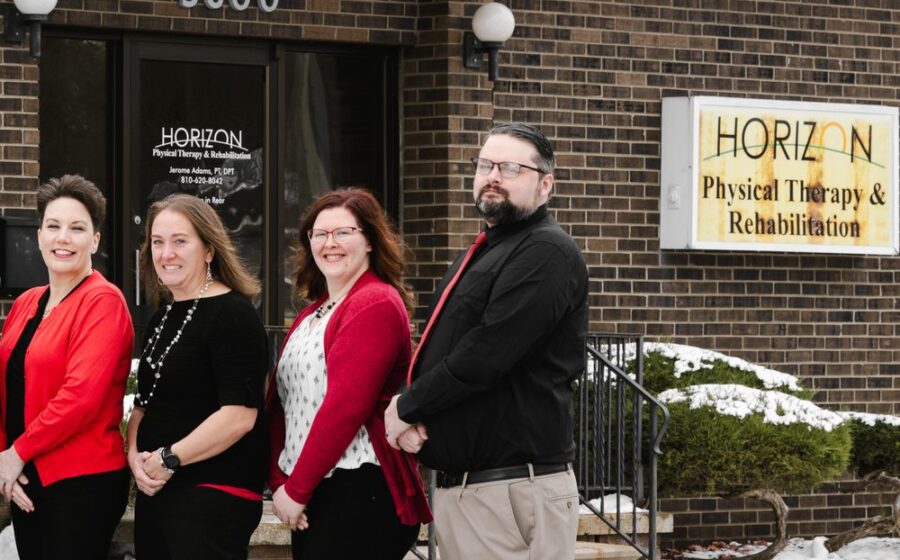
Horizon Physical Therapy & Rehabilitation — evidence-based orthopedic, post-surgical, oncology and sports rehab. Hands-on manual medicine, systemic dry needling and spinal manipulation, delivered by a board-certified orthopaedic specialist who still treats patients himself.
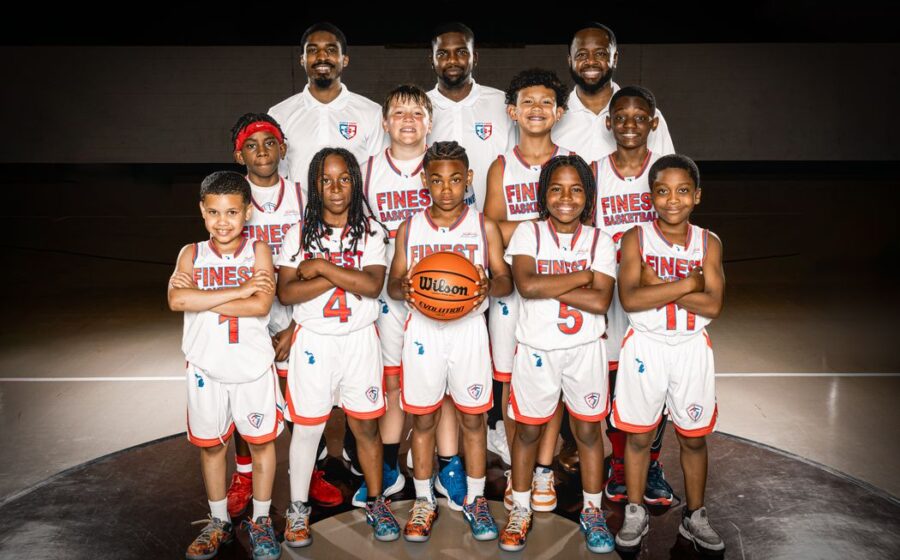
Flint's Finest Basketball Club — a youth program built on skill, character and college exposure. Boys and girls, ages 9 to 17, competing across Michigan and moving on to Division I, II, III, NAIA and JUCO rosters.
Keynotes, panels and clinical education for healthcare organizations, universities, youth sports bodies and community leaders — from an international congress stage in Vancouver to a gym full of Flint parents.
The only Black-owned physical therapy clinic in Flint
The story
Flint built me. So I build in Flint.
I earned my Doctorate in Physical Therapy in 2006 and could have practiced anywhere. I chose the city that raised me — a place that gets written about for what it lacks, and rarely for what it produces.
In 2008 I founded Flint's Finest Basketball Club because our kids deserved real development, not just a place to run. In 2012 I opened Horizon Physical Therapy because our neighbors deserved evidence-based care without a forty-minute drive. Both are still standing. Both are still growing. Neither was handed to me.
Every challenge has been an opportunity to grow. The mission has not changed: empower people through rehabilitation, athletic development and mentorship — and leave the community better than I found it.
I speak from twenty years of doing the work — treating patients, meeting payroll, coaching kids whose futures actually changed. No borrowed frameworks. Four talks I can deliver tomorrow:
Keynote · 45–60 min
Movement Is Medicine
Why the cheapest intervention in healthcare is the one we prescribe last — and how to build a culture of prevention in communities that have been taught to wait until it hurts.
For: health systems, payers, public health, employer wellnessKeynote · 45 min
Owning Your Lane
Building the only Black-owned physical therapy clinic in Flint — competing against health systems with a fraction of the resources, and what it actually takes to keep the doors open and the standard high.
Developing young athletes who last: load management, injury prevention, and the honest conversation about what college recruitment really requires — for coaches and for parents.
Manual medicine, systemic dry needling and spinal manipulation in real practice — what the literature supports, what it does not, and how to teach it to the clinicians coming up behind you.
For: PT/PTA programs, clinical staff, professional associations
My mission extends beyond healthcare. I want to create opportunities, uplift my community, and serve as a role model.
Dr. Jerome Adams Jr., PT, DPT, OCS
Horizon Physical Therapy & Rehabilitation
A practice built on hands, not machines.
Founded 2012. One-on-one time with a licensed clinician, a plan of care you understand, and outcomes we measure — not a room of patients cycling through equipment.
◆Orthopedic, post-surgical and sports rehabilitation
◆Manual medicine, spinal manipulation and systemic dry needling
◆Oncology rehab, lymphedema and women's health
◆Neurologic, geriatric and pediatric physical therapy
◆A clinical teaching site for the next generation of therapists
Between 80 and 100 of our athletes have gone on to play college basketball — Division I, II, III, NAIA and JUCO. That number is the only trophy that matters to me.
◆Elite skill development with a sports-medicine backbone
◆College exposure, recruitment guidance and film
◆Character, academics and mentorship — required, not optional
◆Injury prevention and return-to-play run by an actual DPT
Board-Certified Clinical Specialist in Orthopaedic Physical Therapy, American Board of Physical Therapy Specialties. Certified July 2025 through June 2035 · Certification No. OR253103.
Principles of Manual Medicine with muscle energy technique.
Post-graduate
MDT — Mechanical Diagnosis & Therapy
Cervical, thoracic and lumbar spine.
Faculty
APTA Credentialed Clinical Instructor
Training and mentoring student physical therapists in clinic.
International
WCPT Congress Presenter
15th International World Confederation for Physical Therapy Congress, Vancouver — aerobic exercise training in African American women with breast cancer.
Service
Board Director, YMCA (former)
Plus USA Basketball certified youth coach and APTA member.
Recognition
Best of Flint, 2021
Horizon Physical Therapy & Rehabilitation — recognized for outstanding excellence and customer satisfaction in Flint.
In their words
What people say when I am not in the room.
★★★★★
"I am very pleased to recommend Jerome Adams. I have watched Jerome develop both academically and personally into a great Doctor of Physical Therapy. Jerome is bright, energetic, compassionate and genuinely well rounded. He has actively participated in a diverse assortment of extracurricular activities ranging from counseling youth, church activities and coaching. Jerome has also spent considerable time in the community."
★★★★★
"Horizon Physical Therapy & Rehabilitation holds more than 500 five-star patient reviews — the single most consistent piece of feedback being the one-on-one time patients get with their therapist."
◆◆◆◆◆
"Hidden Gems: Meet Jerome Adams of Horizon Physical Therapy & Rehabilitation and Flint's Finest Basketball Club."